

Trusts in Alberta Real Estate: Why “Title” Isn’t Always the Full Story
In Alberta real estate transactions, it’s common to assume that the person named on Land Title is the true owner. In many cases, that’s correct — but not always.
Trust law is one reason why legal title may differ from beneficial ownership, and why transactions involving family arrangements, estate planning, relationship breakdowns, or financing structures can become complicated. In practice, trust issues can lead to delays, disputes, or even litigation if they are discovered too late.
This article explains trust concepts in plain language and highlights why identifying trust-related issues early can help protect both brokers and clients.
1. What Is a Trust?
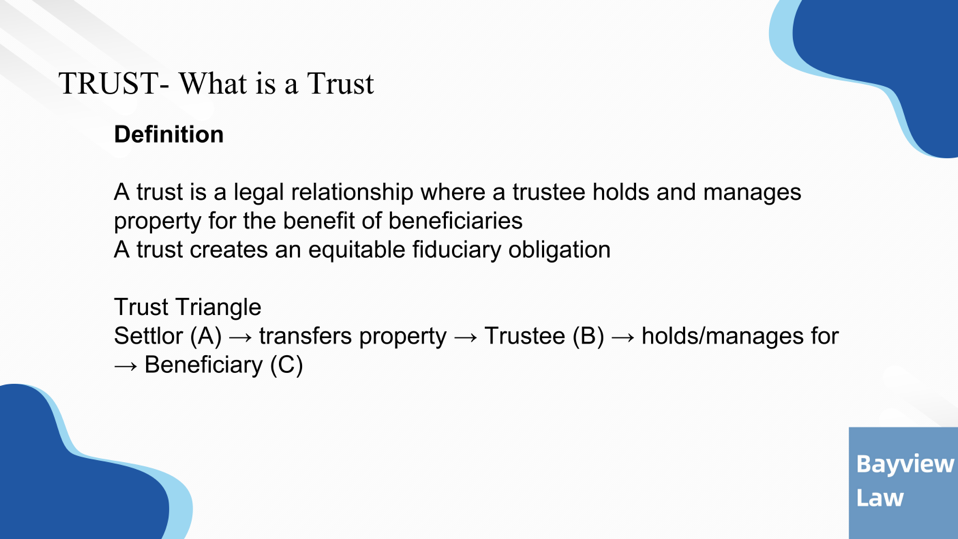
A trust is a legal relationship where a trustee holds and manages property for the benefit of one or more beneficiaries.
A trust creates an equitable fiduciary obligation, which is one of the highest duties recognized by law. A trustee must act honestly and loyally for the beneficiaries. In general, the trustee:
- must not treat the trust property as their own;
- must not take personal benefits or “secret profits”; and
- must follow the trust terms and legal duties.
If a trustee fails to meet these obligations, beneficiaries can enforce their rights — including through court proceedings.
The Trust Triangle
A simple way to understand trusts is the “trust triangle”:
Settlor (A) → transfers property → Trustee (B) → manages it for → Beneficiary (C)
This matters in real estate because title records often reflect legal title, but not always the full beneficial ownership picture.
2. Trusts Split Legal Title and Beneficial Ownership
One of the most important concepts in trust law is that a trust can separate:
- Legal title: who is registered as owner on title (who holds formal control); and
- Beneficial ownership: who truly benefits economically from the property.
A Simple Example
Michelle transfers $60,000 to her lawyer, David, to hold in trust for her 6-year-old grandson Ethan’s future university expenses.
- David (the lawyer) holds legal title to the funds (in a trust account or investment).
- Ethan is the beneficiary, and the funds must be used for Ethan’s education.
- Once the trust is properly created, Michelle typically no longer has legal control over the funds. The trustee must administer them according to the trust rules and terms — not simply based on informal requests.
- Trust property is generally treated as a separate fund, meaning it is usually not treated as the trustee’s personal asset.
In real estate, the same concept can apply when the person on title is holding property for someone else.
3. Different Types of Trusts (3 Main Categories)
Not all trusts are created intentionally — and that is where real estate disputes often arise.
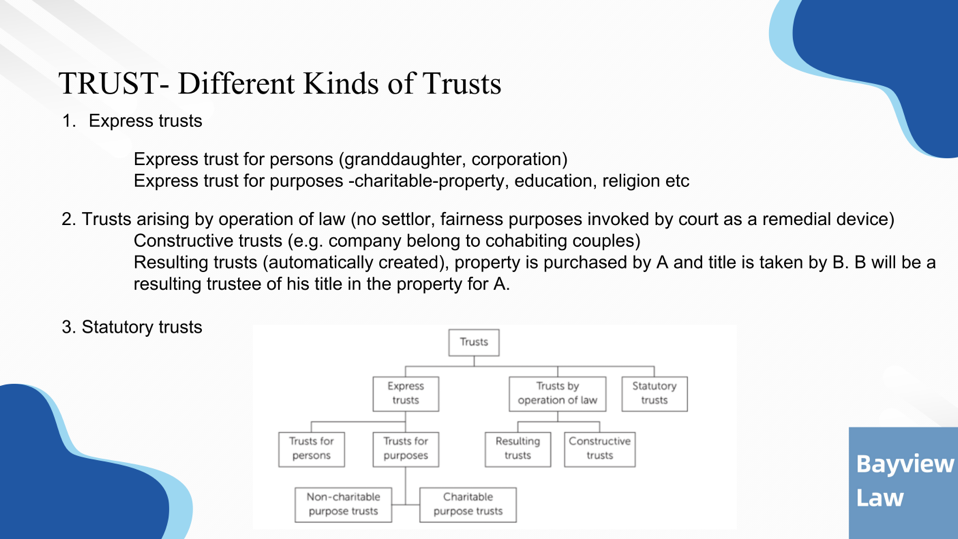
(1) Express Trusts (Intentional / Planned)
Express trusts are created deliberately by a settlor, usually in writing.
They can be set up:
- for persons (e.g., a child, grandchild, corporation); or
- for purposes, most commonly charitable purposes (e.g., education or religion in recognized charitable structures).
(2) Trusts Arising by Operation of Law (Court-Imposed)
Some trusts arise because the court imposes them as a remedy, usually for fairness reasons.
Two common types are:
Constructive trust
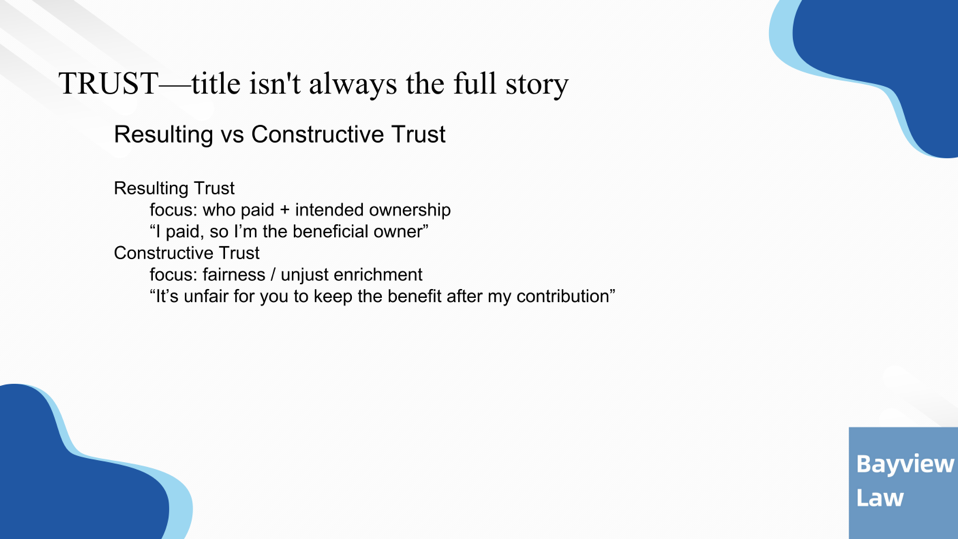
A constructive trust may be imposed where it would be unfair for one party to keep the benefit of property after another party’s significant contribution (unjust enrichment). It commonly appears in disputes involving cohabiting couples, family arrangements, or property improvement contributions.
Resulting trust
A resulting trust often arises where A pays for a property, but title is registered in B’s name. The court may treat B as holding the property in trust for A unless evidence shows the payment was intended as a gift.
(3) Statutory Trusts
Statutory trusts are created by legislation rather than intention or equity. Certain statutory trust concepts arise in regulated contexts, including some insolvency-related situations or specific regulated prepaid funds.
4. Key Trust Terms in Plain Language
Here are the key terms that help clients understand trust structures:
- Settlor: the person who creates an express trust and transfers property into it
- Trustee: the person who holds legal title and administers the property
- Beneficiary: the person who receives the benefit of the trust property
- Trust property (trust res): the asset held in trust (money, shares, or land)
- Trust instrument: the written document setting out the trust terms
- Bare trust: trustee holds title only, with no discretion
- Discretionary trust: trustee has discretion over distributions
- Fixed trust: beneficiary shares are predetermined
- Testamentary trust: created by a will and effective after death
- Inter vivos trust: created during the settlor’s lifetime
5. Bare Trusts: The Most Common Real Estate Trust Issue
The trust concept most commonly encountered in real estate transactions is the bare trust.
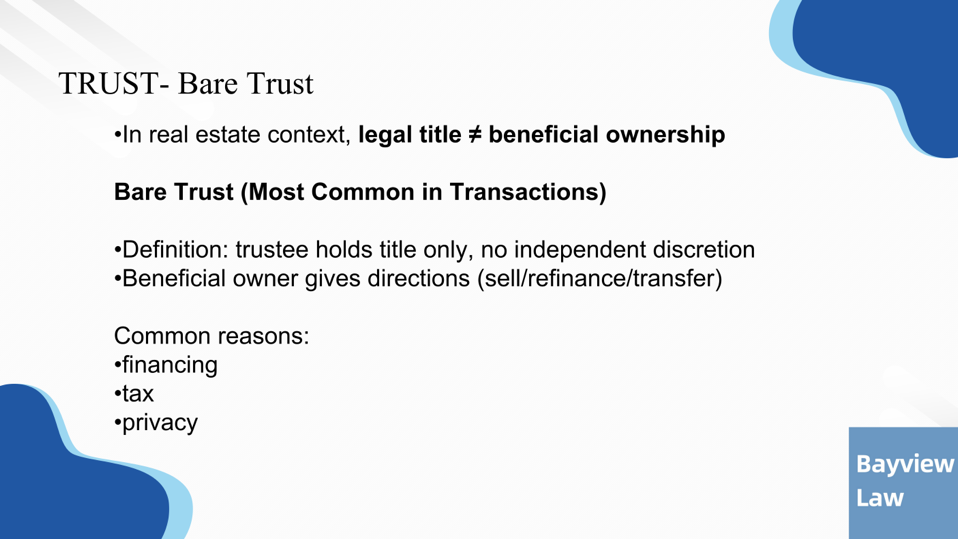
A bare trust is where:
- the trustee is on title;
- the trustee has no independent discretion; and
- the beneficial owner gives all directions (sell/refinance/transfer).
Bare trusts are often used for practical reasons, including:
- financing (one party must be on title to qualify for a mortgage);
- tax planning or structuring; and
- privacy.
Why Bare Trusts Matter in Transactions
Bare trust structures can create transaction risks if identified late:
- authority to sign may become unclear;
- lenders may require additional documentation;
- disputes can arise regarding who receives sale proceeds; and
- litigation risk exists if relationships break down.
Broker takeaway: if a client says “I’m on title but it’s not really mine,” that is a strong sign to pause and involve a lawyer early.
6. When to Involve a Lawyer
Trust-related issues often appear late — sometimes after the deal is already firm. That is when delays and disputes become most costly.
It is wise to involve legal counsel early where:
- title and payment sources do not align;
- family members are funding purchases;
- an estate or POA is involved; or
- a dispute may exist between parties.
At Bayview Law, we assist clients with:
- trust and beneficial ownership analysis;
- bare trust documentation and related risk management; and
- residential and commercial real estate transactions in Alberta.
Disclaimer
This article is for general informational purposes only and does not constitute legal advice. Reading this article does not create a solicitor-client relationship. Legal outcomes depend on specific facts and applicable law.
Author: Mara Li
Copyright:© Bayview Law. All rights reserved. Unauthorized reproduction, distribution, or sharing is prohibited.